3D Personnel Employee of the Month - July 2026
31 Aug, 2026




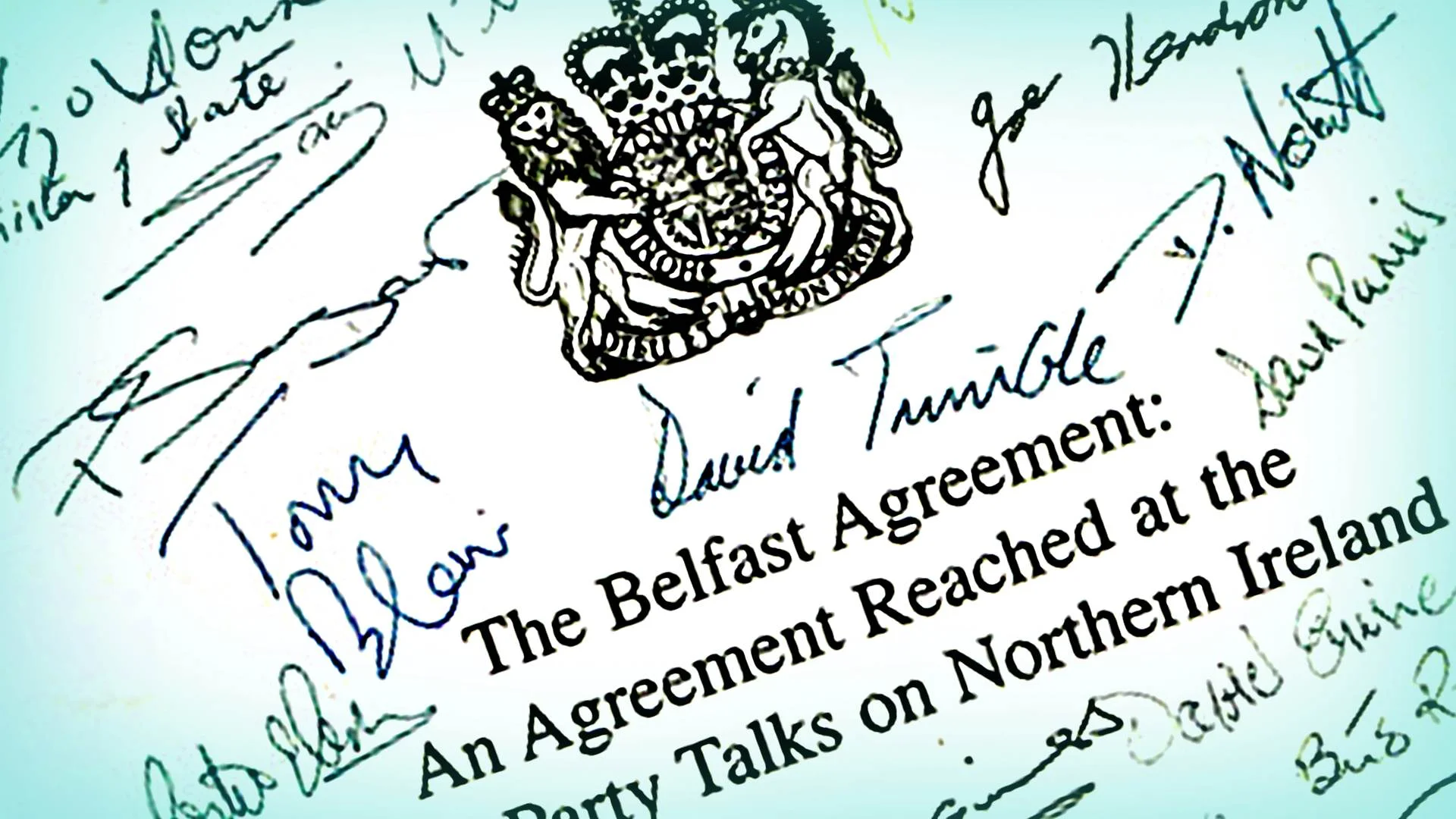
As Northern Ireland marked the 25th anniversary of the Good Friday Agreement (GFA) in April 2023, it offered a moment to reflect on how profoundly the peace process reshaped the region’s construction landscape. Now, three years on, the pace of development has only accelerated — driven by political stability, renewed investment, and Northern Ireland’s unique trading position under the Windsor Framework.
This updated 2026 edition expands on the original article, adds major new projects, and incorporates the latest employment and industry data.
Nearly thirty years on from the signing of the Agreement, memories of that period are somewhat dimmed, although of course we have the Derry Girls to thank for their more recent refresher, or in the case of the younger reader, a tongue in cheek look back (history lesson) over that momentous period in the North’s history.
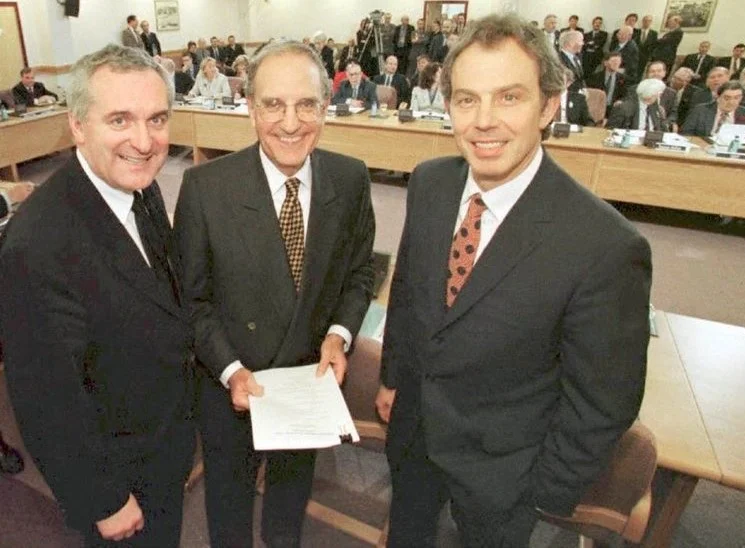 Image: Bertie Ahern (Irish Taoiseach), George Mitchell (US Special Envoy) and Tony Blair (UK Prime Minister)
While peace arrived in 1998, cranes didn’t immediately fill the Belfast skyline. Planning, funding, and political stabilisation took time. But by the early 2010s, Northern Ireland entered a period of sustained regeneration — from Belfast’s city centre to the North Coast and the North‑West.
One of the earliest signals of change was the transformation of the former Ulster Bank building in Belfast into the luxury five-star Merchant Hotel, completed in 2006 with a major £16.5 million extension following in 2010. It set the tone for a decade of ambitious redevelopment.
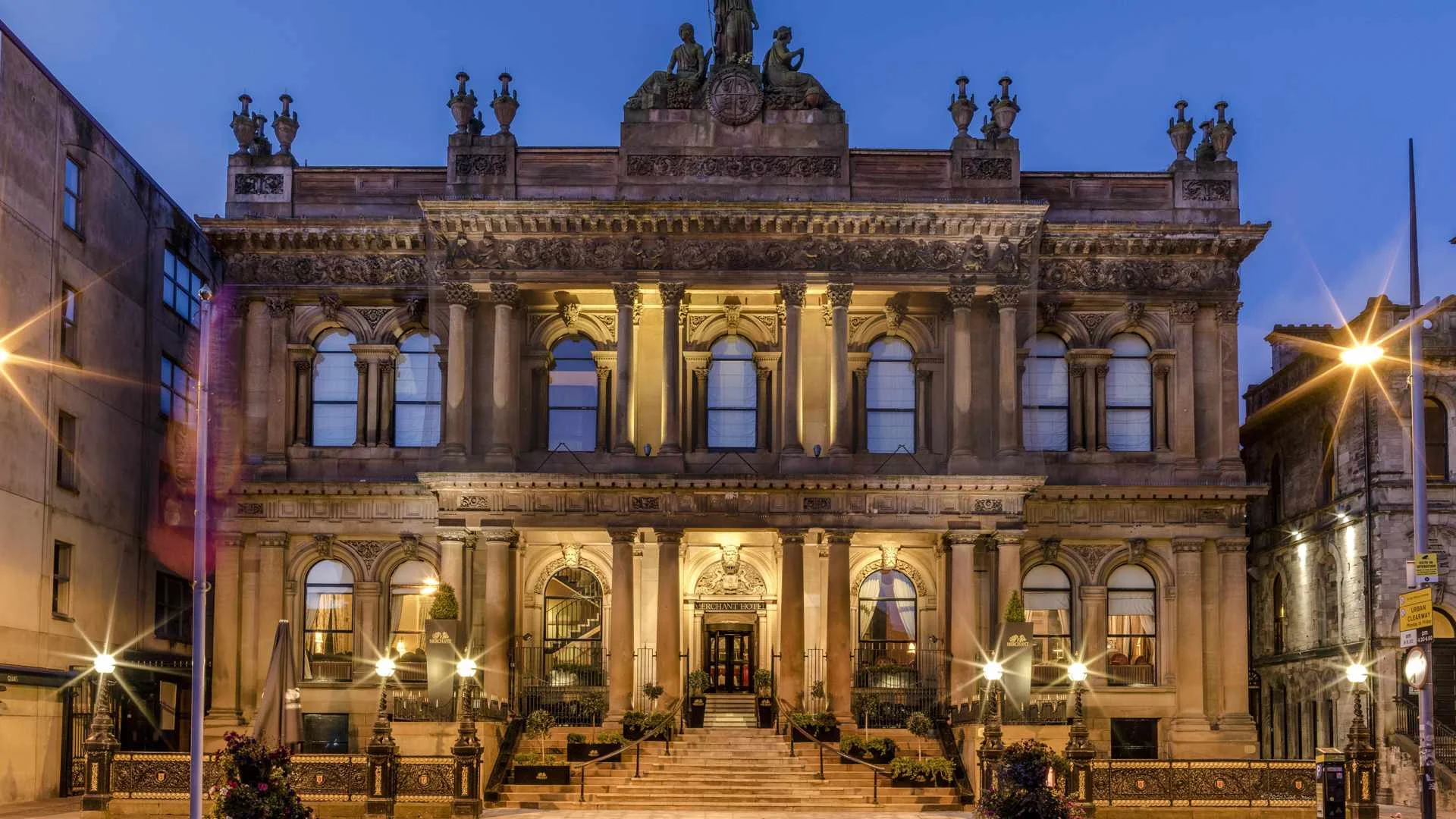 Image: The Merchant Hotel, Belfast
Northern Ireland has undergone significant infrastructural and building developments in the last 25 years. Here is a list of some of those landmark projects:
Opened in 2012, Titanic Belfast is an award-winning, world-class tourist attraction and museum dedicated to the history of RMS Titanic. The building is designed to look like the ship's hull and has become a global architectural icon. Today it is one of the most visited tourist destinations in Northern Ireland, with visitor figures of close to 900k during 2025.
This landmark retail and leisure development opened in 2008 in the centre of Belfast. Victoria Square's ionic centrepiece is a glass dome offers visitors panoramic views of the city.
The Metropolitan Arts Centre (MAC) opened in 2012 in Belfast. A cultural hub anchoring the Cathedral Quarter's regeneration, the MAC venue hosts exhibitions, music, and theatre performances in the heart of Belfast.
Opened in 2011, the Peace Bridge is a pedestrian and cycle bridge that spans the River Foyle in Derry. The bridge has become a symbol of unity and reconciliation in the city, while also being a catalyst for the city’s riverfront revival.
This visitor centre opened in 2012 at the Giant’s Causeway in Antrim which is NI's only UNESCO World Heritage Site. The building's striking, sustainable design is inspired by the basalt columns of the Causeway. Visitor numbers during 2025 were in excess of 400,000.
The Ulster Museum underwent a significant refurbishment and expansion in 2009. The museum houses a vast collection of art, history, and natural sciences.
Formerly known as the Odyssey Arena, the SSE Arena is a modern indoor arena that opened in 2000. Located in the Titanic Quarter of Belfast, the arena has hosted numerous concerts, sporting events, and exhibitions. The Arena has become a key anchor in the Titanic Quarter’s long‑term redevelopment.
The Craigavon Bridge in Derry underwent a significant refurbishment in 2020. The bridge, originally built in 1933, is a historic landmark and an essential transportation link in the city.
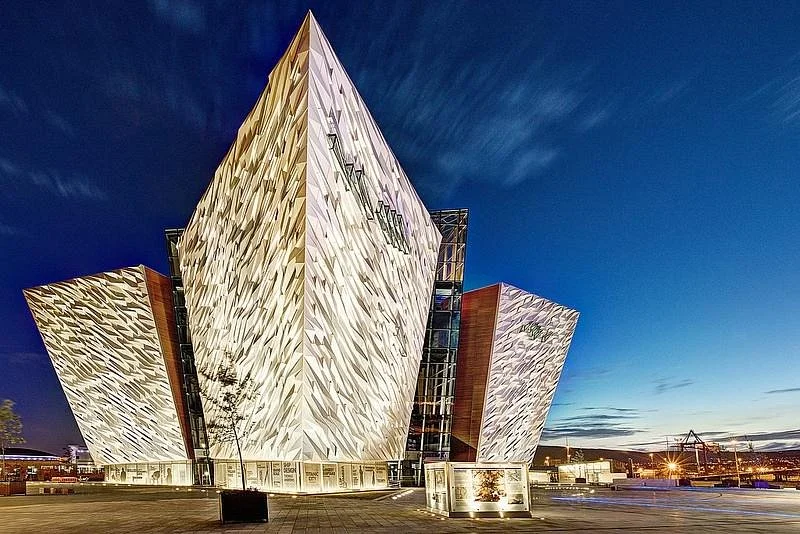 Image: Titanic Belfast
There have been several historic buildings in Northern Ireland that have undergone significant redevelopment since the signing of the agreement. Here are some examples:
The Crumlin Road Gaol in Belfast operated as a prison from 1845 to 1996. It has since been converted into a successful tourist attraction and conference centre. The major heritage restoration of the Gaol began in 2011 and was completed in 2013.
This former military base overlooking the River Foyle in Derry was originally opened in 1841. Gifted to the Executive Office, under the Reinvestment and Reform Initiative in 2001, it was redeveloped into a thriving cultural and events space. The work began in 2009 and was completed in 2011.
This historic building in Belfast dates back to 1893. It was redeveloped and reopened in 2018 as a landmark luxury hotel and fast became a symbol of Belfast’s hospitality boom.
The Ulster Hall in Belfast is a concert hall built in 1862. A sensitive restoration of one of Belfast’s most important civic buildings was completed in 2009 and included the restoration of its historic organ.
The Guildhall in Derry is a historic building that has served as the city's seat of government since 1890. It underwent a major refurbishment in 2012, which included the restoration of its clock tower and its iconic clock modelled on London’s Big Ben.
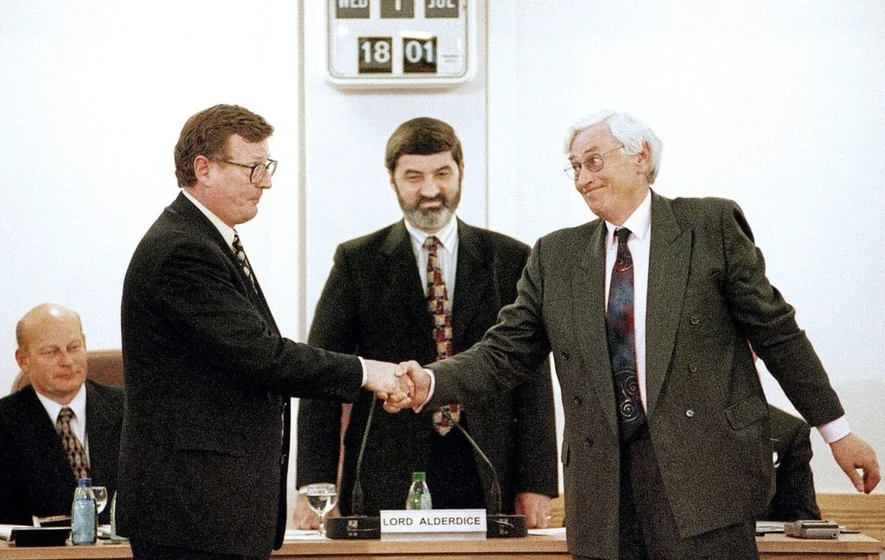 Image: David Trimble (First Minister) and Seamus Mallon (Deputy First Minister)
There have also been several notable redevelopments of sporting venues in the North since the signing of the Good Friday Agreement. These include:
Windsor Park football stadium, located in Belfast, underwent a major redevelopment between 2014 and 2016, which included the construction of new stands, increasing the stadium's capacity to over 18,000. Currently the base for the Northern Ireland Football team.
The Ravenhill Stadium (now rebranded as Kingspan Stadium) is the home of Ulster Rugby and is located in Belfast. It underwent a significant redevelopment between 2010 and 2014, which included the construction of new stands, increasing the stadium's capacity to over 18,000.
Situated in West Belfast, Casement Park has historically been the Gaelic Athletic Association’s (GAA) main stadium in Northern Ireland. After years of technical and political delays, the now dilapidated structure is currently awaiting major redevelopment. This will likely see the construction of a new stadium with a capacity of up to 34,000.
This remains one of the most significant unrealised capital projects in Northern Ireland.
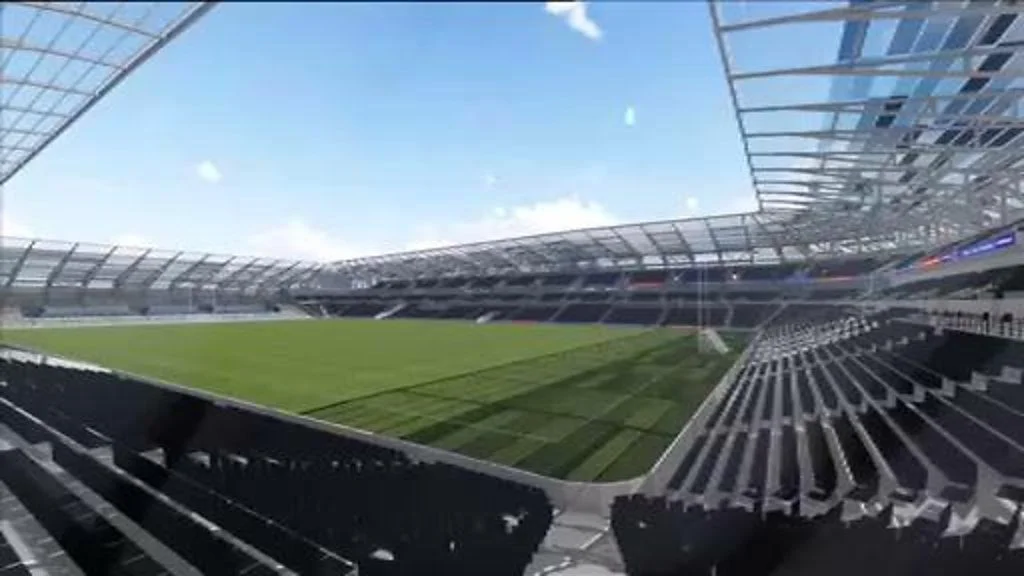 Image: Artist's Impression of the Redeveloped Casement Park, Belfast
The level of development and redevelopment projects in Northern Ireland in the last 25 years has had a significant impact on jobs in the construction industry. The construction sector has been a major contributor to the Northern Ireland economy, and the increase in infrastructure and building projects has created a high demand for skilled workers.
According to data from the Northern Ireland Statistics and Research Agency (NISRA), employment in the construction industry in Northern Ireland has seen a significant increase in recent years. In 2010, there were around 48,800 jobs in the construction industry in Northern Ireland, which rose to approximately 60,000 in 2020, representing an increase of around 23%.
The increase in construction jobs has had a positive impact on the wider economy, as it has created more opportunities for workers and businesses. The construction sector also supports a range of other industries, including manufacturing, transport, and professional services.
Overall, the level of development and redevelopment projects in Northern Ireland has had a positive impact on the construction industry, creating jobs and contributing to economic growth. And despite the downturn precipitated by the COVID-19 pandemic, a return to normal levels of construction is well under way in Northern Ireland.
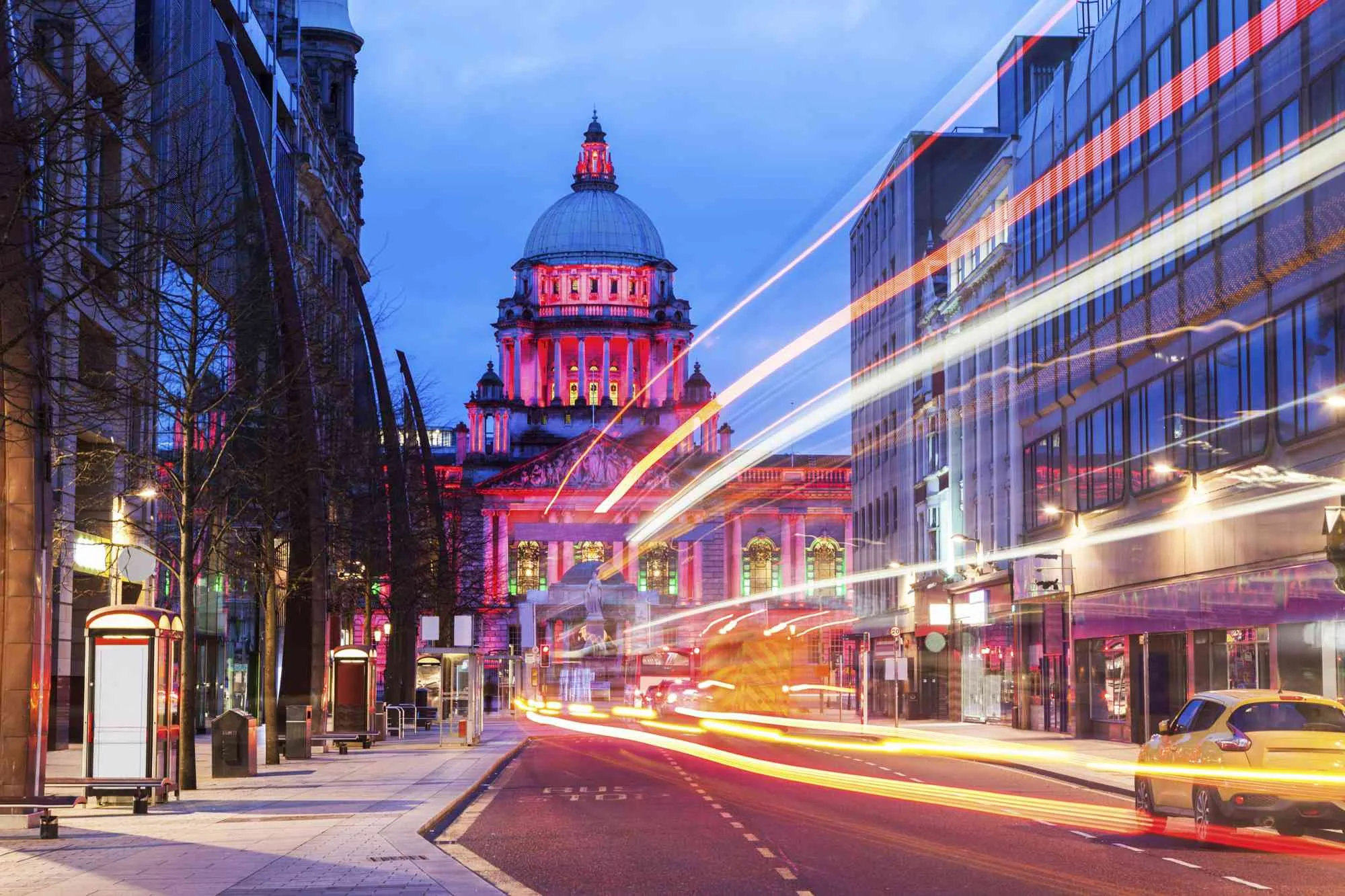 Image: Belfast City Hall
The concept of the "peace dividend" in relation to buildings and construction in Northern Ireland is an important one. The term referred to the potential economic benefits that could result from the ending of the conflict in Northern Ireland, including increased investment in infrastructure and building projects.
Two quotes from the time offer insight into the hopes and aspirations of those involved in the process.
The peace dividend in Northern Ireland is the chance to build a better society, to create a more prosperous economy, and to heal the wounds of the past.
Tony Blair, former Prime Minister of the UK
The peace dividend in Northern Ireland is not just about bricks and mortar, it's about the opportunities that peace can bring.
Martin McGuinness, former Deputy First Minister of Northern Ireland
Whereas there can be some warranted scepticism around progress in areas, like the levels of prosperity created across society in Northern Ireland and the ongoing political divides, when in comes to infrastructure and building developments, the GFA has indeed had a significant positive impact.
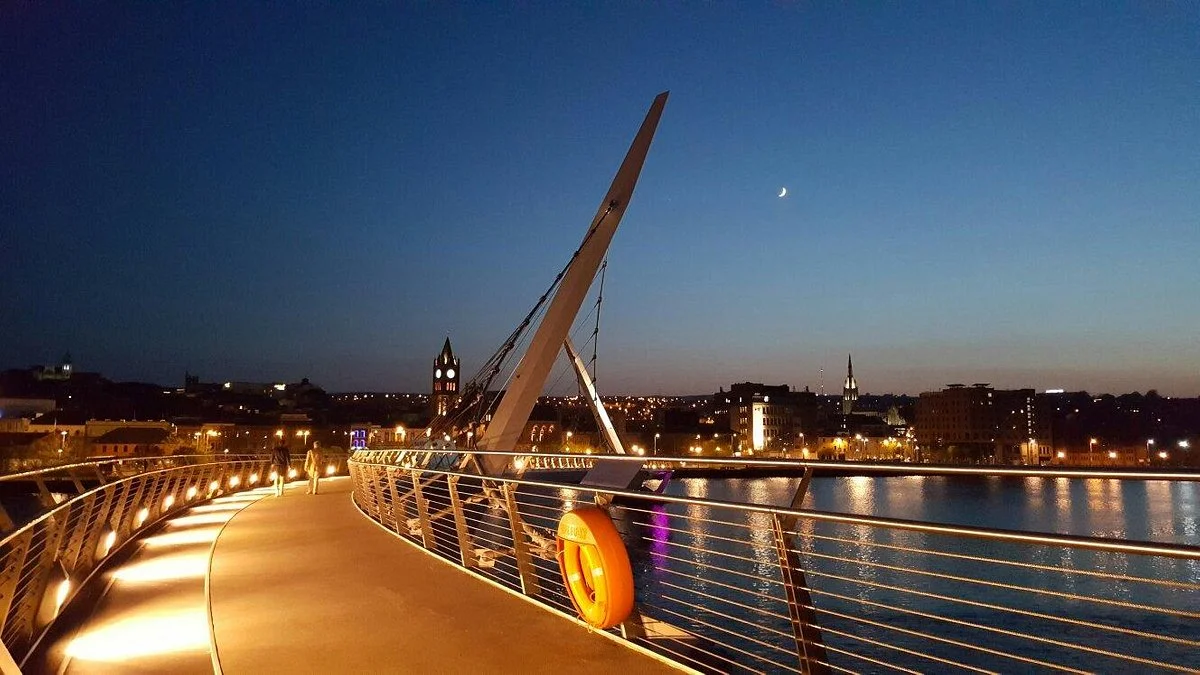 Image: Peace Bridge, Derry
With the implementation of the Windsor Framework and the unique opportunities created for Northern Ireland as a result, hopefully the next 25 years will bring many more positive developments, as the Construction Industry continues to provide jobs and improved infrastructure, and helps reshape the new Northern Ireland.
If you are looking for information on work opportunities, or training resources within the construction industry in Northern Ireland, please chat to any of the 3D Team in our Belfast or Derry offices.
For information on what qualifications you will need to work in construction jobs in Northern Ireland, the UK, or Ireland have a read of our 3D Guide
Read also our article on WorkForce Training Services in Northern Ireland